
You’ve probably typed what is burr coffee grinder at some point while staring at a bag of beans thinking, “why does my coffee taste… kinda flat, even tho it smells amazing?” Yeah, that moment. It’s not just you, and it’s not just the beans either, there’s this whole quiet little world of grinding that nobody really warns you about.
So let’s talk about it in a way that actually makes sense, not like those stiff manuals that sound like a robot learned coffee yesterday.
So… What Is a Burr Coffee Grinder, Really?
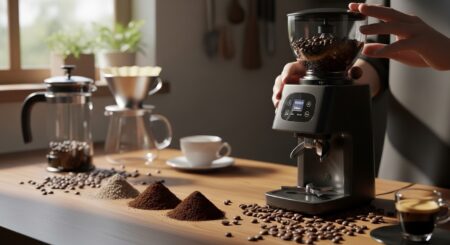
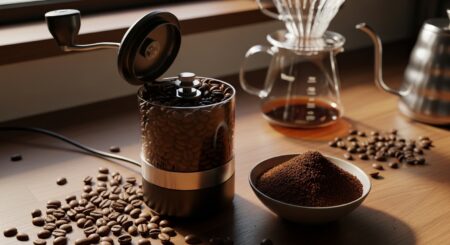
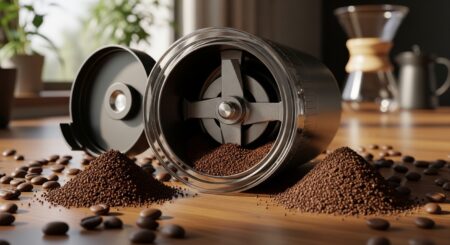
A burr coffee grinder is basically a machine that crushes coffee beans between two surfaces (called burrs) instead of chopping them up randomly like those blade grinders do. But saying it like that feels too neat, too tidy, and honestly it doesn’t explain why people suddenly become weirdly obsessed with them.
Think of it like this: instead of smashing beans into uneven bits (some powder, some chunky like gravel), a burr grinder kinda persuades them into being the same size. Or at least, tries real hard to.
And that matters more than you’d expect, because coffee brewing is picky. Like, really picky. If your grind size is all over the place, your cup ends up confused, half bitter, half sour, like it couldn’t decide what mood it’s in.
The Two Main Types of Burr Coffee Grinders
You’d assume there’s like 10 types, but nah, it mostly comes down to two. Simple, but also not simple when you actually start choosing.
1. Flat Burr Grinders
Flat burr grinders use two parallel rings to grind the beans. They’re known for producing very consistent grind sizes, which is great if you’re chasing that café-level cup at home.
But here’s the thing people don’t always say out loud:
- They can get a bit louder than expected
- They sometimes heat up more during grinding (which can slightly affect flavor, tho not always dramatically)
- They’re often found in higher-end machines
Still, if you’re someone who notices tiny taste differences, you’ll probably lean toward this type without even realizing why.
2. Conical Burr Grinders
These use a cone-shaped burr sitting inside another ring-shaped burr. Sounds fancy, but it’s actually more common in home grinders.
What’s nice about them:
- Usually quieter
- Slower grinding, which means less heat
- Often more forgiving if you’re not super precise
They don’t always produce perfectly uniform grounds like flat burrs, but honestly, for most people, the difference is barely noticeable unless you’re really deep into coffee.
Why Burr Grinders Are Such a Big Deal (More Than You Expect)
Okay so here’s where things get a bit real. You might think “it’s just grinding beans, how much difference could it make?” but it’s kinda like using a dull knife in cooking. Technically it works, but… not really.
Consistency Is Everything
Coffee extraction depends on surface area. That sounds science-y but it just means:
- Smaller particles = extract faster
- Bigger particles = extract slower
If your grind size is uneven:
- Some bits over-extract (bitter taste)
- Some under-extract (sour taste)
And then your cup tastes weird, even if you used great beans.
Flavor Actually Changes, Like Noticeably
A study published in Scientific Reports (2018) found that grind uniformity directly impacts extraction efficiency and flavor clarity. So yeah, it’s not just coffee nerds being dramatic.
You might suddenly taste:
- Chocolate notes that weren’t there before
- Fruitiness in lighter roasts
- Less harsh bitterness overall
And you’ll be like… wait, has coffee always been like this?
Better Control Over Brewing Methods
Different brewing styles need different grind sizes:
| Brewing Method | Grind Size |
|---|---|
| Espresso | Very fine |
| Pour-over | Medium |
| French press | Coarse |
| Cold brew | Extra coarse |
A burr coffee grinder lets you actually adjust this. A blade grinder just kinda shrugs and hopes for the best.
Burr Grinder vs Blade Grinder (The Real Difference)
People always compare these two, but most comparisons feel… too clean. So here’s the more honest version.
Blade Grinder
- Spins a blade like a blender
- Chops beans unevenly
- Cheaper, sure
- Hard to control grind size
You shake it, pulse it, hope it works. Sometimes it does, sometimes not really.
Burr Grinder
- Crushes beans evenly
- Adjustable grind settings
- More consistent results
- Usually more expensive
It’s less chaotic. Less guessing. More “oh okay, that actually worked.”
Manual vs Electric Burr Coffee Grinders
This one depends more on your personality than anything else, which sounds weird but stay with me.
Manual Burr Grinders
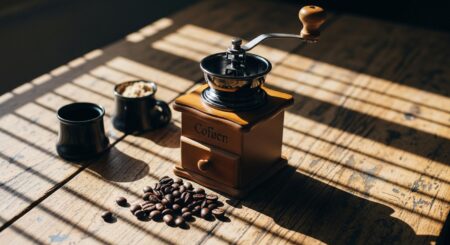
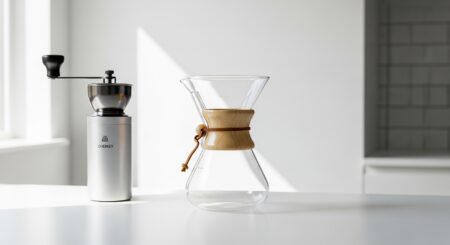
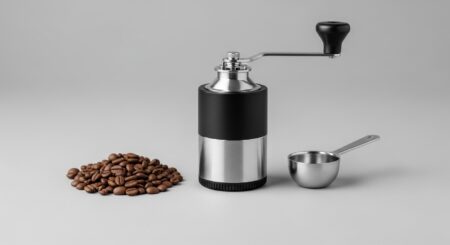
These are hand-cranked. You literally grind your coffee yourself.
Pros:
- Portable
- Quiet
- Often cheaper
Cons:
- Takes effort (especially for fine grinds)
- Not great if you’re making multiple cups
Some people love the ritual. Others try it once and go “nah I’m good.”
Electric Burr Grinders
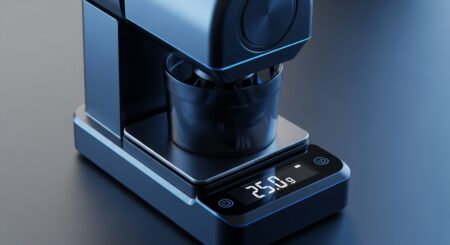
Press a button, done.
Pros:
- Fast
- Convenient
- Consistent
Cons:
- More expensive
- Takes up space
- Makes noise
If you drink coffee daily, electric usually makes more sense, unless you enjoy the process itself.
What To Look For in a Burr Coffee Grinder
Now here’s where people get stuck, because suddenly there are too many options and everything sounds important.
Grind Settings
More settings = more control. Simple as that.
Look for:
- At least 15–20 grind levels
- Easy adjustment (not hidden or awkward)
Burr Material
Usually:
- Stainless steel (common, durable)
- Ceramic (lasts longer, doesn’t heat up as much)
Ceramic burrs tend to stay sharp longer, but they can crack if dropped. So… don’t drop them.
Size and Capacity
Think about:
- How much coffee you make daily
- Counter space
A huge grinder might look cool but feel annoying after a week.
Ease of Cleaning
This gets ignored until it’s too late.
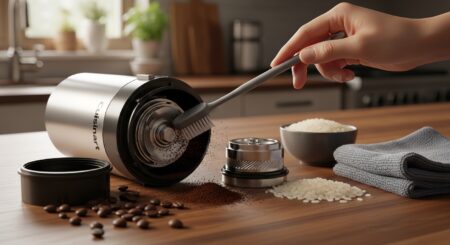
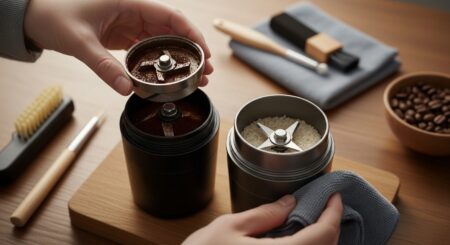
Coffee oils build up, and if it’s hard to clean, you’ll just… not do it. Then flavor suffers.
Common Mistakes People Make (Yeah, Probably You Too)
Let’s be honest, everyone messes this up at first.
- Using the wrong grind size for their brewing method
- Not cleaning the grinder regularly
- Buying based only on price
- Expecting instant perfection
Coffee takes a bit of trial and error. Even with a burr grinder.
Is a Burr Coffee Grinder Worth It?
Short answer: yeah, mostly.
Longer, more honest answer: it depends on how much you care about your coffee.
If you:
- Drink coffee occasionally
- Don’t notice flavor differences much
Then maybe it’s not urgent.
But if you:
- Brew coffee daily
- Care about taste
- Keep wondering why café coffee tastes better
Then a burr grinder is probably the missing piece.
A Slightly Unexpected Thought
Here’s the thing nobody really says: getting a burr coffee grinder doesn’t just improve your coffee, it kinda changes how you think about it. You start noticing stuff. Subtle differences. You get picky in a way that’s both annoying and satisfying.
And yeah, maybe that sounds dramatic, but once you taste a properly ground brew, it’s hard to go back. Like, really hard.
Final Thoughts (Before You Overthink It Too Much)
If you came here asking what is burr coffee grinder, you were probably already halfway convinced something in your coffee routine felt off. And honestly, you were right.
It’s not magic, and it won’t fix bad beans or bad brewing habits overnight. But it does fix one of the most overlooked parts of coffee making, which is how the beans get broken down in the first place.
And weirdly, that small change ends up making a big difference. Not instantly mind-blowing, but enough that you pause mid-sip and go, “oh… okay, that’s better.”
And sometimes, that’s all you really needed.