

Many people assume that playing a synthesizer requires years of formal piano training before you can produce a single musical phrase. That is a myth. You can start creating textures and melodies immediately if you pick the right gear.
The market for Best Beginner Synthesizers is wide and diverse. Whether you want a simple toy or a full production station, these tools turn electricity into art. Let us compare the right equipment to help you begin your journey.
Key Takeaways
- Prioritize keyboards with built-in speakers if you want to play without connecting to an external amplifier or computer.
- Choose analog modeling hardware if you prefer twisting physical knobs over menu-diving on a digital screen.
- Verify that the key count suits your workspace size, as 37 keys suffice for melodies while 61 keys are necessary for two-handed playing.
- Select a workstation model if your primary goal is composing complete songs rather than just designing unique sound patches.
- Invest in instructional books or guides early on to grasp the signal flow and subtractive synthesis fundamentals.
| Perfect Entry Point |  |
Build Your Own Portable Touchpad Synthesizer | Extremely hands-on learning | Simple 8-key interface | Educational construction process | View on Amazon | Read Review |
| Classic Sound Design |  |
Yamaha Reface CS Analog Modeling Synthesizer | Intuitive slider interface | Warm analog tones | Highly portable size | View on Amazon | Read Review |
| Complete Production Studio |  |
Korg Kross 2 Workstation Synthesizer | Vast sound library | Built-in audio recorder | Lightweight portable frame | View on Amazon | Read Review |
| Dynamic Performance Tool |  |
Korg EK-50 L Arranger Keyboard | Powerful integrated speakers | Accompaniment styles included | Simple layout design | View on Amazon | Read Review |
| True Analog Character |  |
Behringer MS-5 Analog Synthesizer | Authentic analog sound | Durable build quality | Hands-on control layout | View on Amazon | Read Review |
| Theory Learning Resource |  |
Essential Synthesizer Techniques Guide | Clear instructional format | Covers core concepts | Beginner-friendly explanations | View on Amazon | Read Review |
| Skill Building Aid |  |
Otamatone Beginner Songbook Guide | Visual note maps | Extensive song list | No reading required | View on Amazon | Read Review |
| Deep Technical Reference | 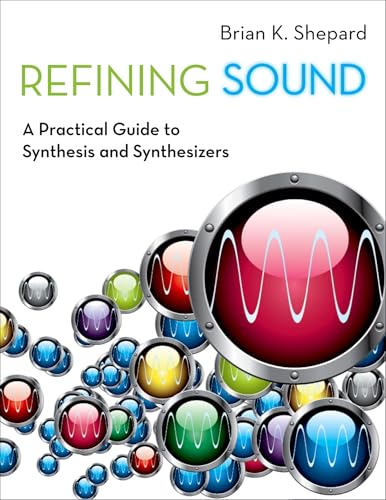 |
Practical Synthesis Theory Guide | Detailed technical explanations | Practical application advice | Well-structured lessons | View on Amazon | Read Review |
More Details on Our Top Picks
-
Build Your Own Portable Touchpad Synthesizer
If you want to understand the core concepts of synthesis without staring at a complex manual, this kit is your best bet. It strips the instrument down to its bare essentials, letting you physically see how signal flow creates sound.
The assembly process is like building a puzzle that actually sings back to you. While it lacks the depth of professional hardware, it serves as an ideal teaching tool for grasping basic oscillators and touch-sensitive control.
- Keyboard Size:8-key touchpad
- Target Audience:Beginners and students
- Additional Feature:Battery operated
- Additional Feature:Portable compact design
- Additional Feature:Educational electronics kit
-
Yamaha Reface CS Analog Modeling Synthesizer
This synth mimics the legendary feel of vintage analog gear while keeping the interface straightforward and intuitive. You get a handful of sliders that control the sound, making it a breezy experience for those who prefer tactile knobs over menu diving.
It excels at warm, punchy leads and thick bass lines. You might find the mini keys a bit tight if you have large fingers, but the stellar sound engine far outweighs the compact keybed.
- Brand Name:Yamaha
- Keyboard Size:37 mini keys
- Synthesizer Type:Analog modeling
- Power Source:Battery or adapter
- Additional Feature:Built-in phrase looper
- Additional Feature:Integrated stereo speakers
- Additional Feature:Multi-effect processor
-
Korg Kross 2 Workstation Synthesizer
Think of this as a Swiss Army knife for musicians. It packs a massive library of sounds, a built-in recorder, and a sequencer into one chassis, allowing you to move from an idea to a finished song in minutes.
The menu system is quite deep, which can feel like a dense forest when you are just starting out. Stick with it, though, and you will find that it handles almost any musical genre with ease.
- Brand Name:Korg
- Keyboard Size:61 keys
- Synthesizer Type:Workstation
- Power Source:Battery or adapter
- Additional Feature:Integrated sampler pad
- Additional Feature:Step sequencer included
- Additional Feature:Microphone input jack
-
Korg EK-50 L Arranger Keyboard
This keyboard is designed to make you sound like a full band even if you are playing solo. The built-in accompaniment styles react to your chords, providing a professional backing track that fills out your arrangements instantly.
The interface is bright and easy to read, ensuring you spend your time playing music rather than deciphering settings. It is a fantastic choice if you want to perform live or write complex compositions quickly.
- Brand Name:Korg
- Keyboard Size:61 keys
- Synthesizer Type:Arranger
- Power Source:AC adapter
- Additional Feature:Backlit control buttons
- Additional Feature:Stereo line out
- Additional Feature:USB host port
-
Behringer MS-5 Analog Synthesizer
If you want the authentic grit of classic hardware, this unit delivers. It uses a pure analog signal path that provides a rich, unstable, and organic sound that digital presets simply cannot replicate.
Be aware that there is no memory for saving your patches, so you must re-create your sounds manually. This limitation is actually a blessing, as it forces you to learn how knob positions fundamentally change the audio.
- Brand Name:Behringer
- Keyboard Size:37 keys
- Synthesizer Type:Analog
- Power Source:AC adapter
- Additional Feature:Integrated arpeggiator
- Additional Feature:External signal input
- Additional Feature:Patch point connectivity
-
Essential Synthesizer Techniques Guide
Sometimes the best tool for your studio is a book. This guide translates technical jargon into plain English, helping you understand how to shape waveforms into the sounds you hear in your head.
It is an excellent companion to any of the hardware listed here. You will move past random knob turning and start making intentional, informed choices about your music.
- Additional Feature:Step-by-step exercises
- Additional Feature:Theory and practice balance
- Additional Feature:Concise technical definitions
-
Otamatone Beginner Songbook Guide
While technically geared toward the Otamatone, this book is a secret weapon for learning music theory and note recognition. It removes the stress of reading standard notation by using simple diagrams to map out your practice sessions.
Using this alongside a keyboard helps you internalize rhythm and melody without the usual headache. It makes the act of playing feel more like a fun game than a chore.
- Additional Feature:Three difficulty levels
- Additional Feature:Classical and pop favorites
- Additional Feature:Clear letter diagrams
-
Practical Synthesis Theory Guide
This book acts as a comprehensive map for the complex world of sound design. It explains how oscillators, filters, and envelopes function together like the gears of a clock to create unique textures.
If you find yourself hitting a wall with your hardware, this resource will provide the missing context. It turns a confusing pile of buttons into a logical system that you can master.
- Additional Feature:Covers advanced sound design
- Additional Feature:Theory-based learning path
- Additional Feature:Professional workflow tips
